
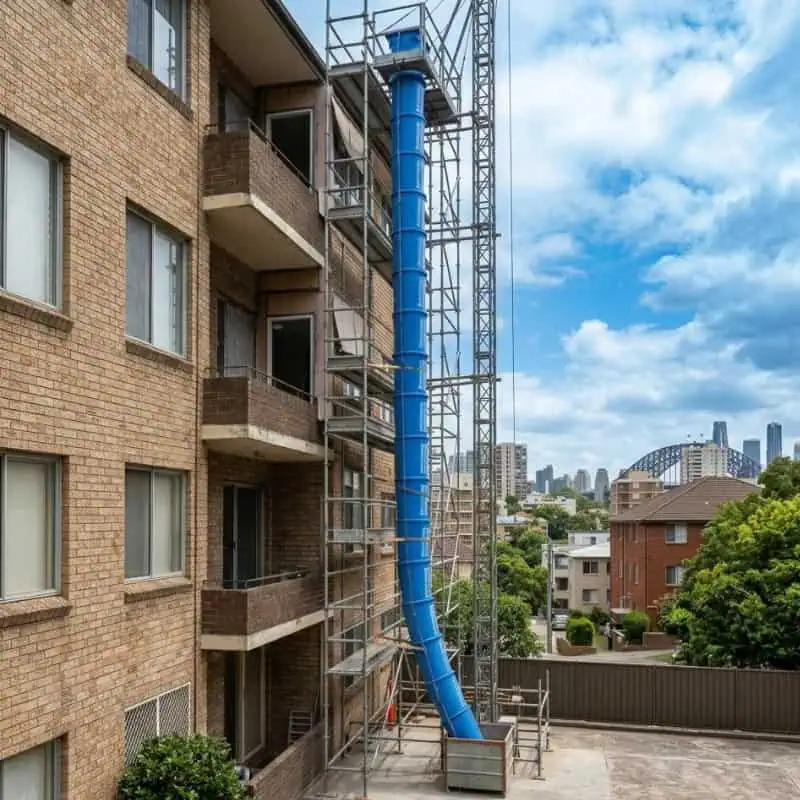
Renovating inside a strata building in Sydney can feel like doing surgery in a shared living room—especially when coordinating waste removal with a rubbish chute. You’re not just managing trades, materials, and timelines. You’re managing corridors, lifts, foyers, loading zones, fire doors, by-laws, neighbours working from home, and a strata committee that (rightly) wants the building protected.
The good news is that most “renovation mess” issues are preventable. Clean, compliant strata renovations don’t happen by accident. They happen because someone sets standards early, controls dust and debris properly, and treats common property like it’s a showroom every day, not just at handover.
This guide gives you a realistic, strata-friendly system to:
• prevent dust trails and debris spills
• protect common areas (especially lifts and hallways)
• reduce complaints and keep relationships calm
• close down daily so the building stays liveable
• stay aligned with typical NSW strata expectations (without legalese)
A practical baseline for NSW strata renovations
Every building is different, but most strata-renovation friction comes down to the same things: approvals, access, noise, cleanliness, and damage to common property. If you’re unsure what applies in your situation, start with NSW Government guidance on strata renovations and permissions, then match it to your building’s by-laws and renovation rules: Strata renovations in NSW.
Start before day one: set expectations and controls early
1) Get your “rules of the building” in writing
Before you bring in a single tool, confirm:
• approved work hours (and any quiet times)
• lift booking rules and padding requirements
• which entrance is for trades and deliveries
• where materials can be staged (if anywhere)
• how rubbish must be stored and removed
• cleaning expectations for common areas
• requirements for protecting floors/walls/doors
• any special rules (heritage finishes, tight fire egress, security procedures)
Tip: if you’re a resident renovator, don’t rely on “someone said it’s fine”. Ask for the written renovation pack or by-law references. It’s much easier to stay compliant when you can point to agreed requirements.
2) Do a “common property walk-through” with photos
Take date-stamped photos of:
• lift interiors, doors, and thresholds
• corridor walls and corners
• foyer flooring and skirting
• fire doors and signage
• any existing chips, scuffs, or loose tiles
This protects everyone. It also makes it easier to resolve disputes about damage quickly and fairly.
3) Write a one-page site conduct plan (simple is best)
A short plan sets the tone for trades and reduces misunderstandings. Include:
• where shoes/boots get cleaned before exiting the unit
• how dust is controlled (containment + HEPA vacuuming)
• how materials are moved (trolleys, lift protection, spotter)
• how waste is bagged, sealed, and removed
• daily close-down time and checklist owner
• what happens if something spills or gets damaged (immediate clean + report)
If you’re managing multiple trades, make this a condition of access. “If you can’t follow the cleanliness controls, you can’t work in the building” sounds strict, but it’s how you avoid chaos.
Control dust first (because dust is what neighbours notice most)
If neighbours complain during renovations, the trigger is often dust: visible tracks in hallways, powder in lifts, or odours and irritation that spread beyond the unit.
4) Contain the work zone properly
Set up barriers so dust stays inside the apartment:
• Seal the work area with plastic sheeting and tape where appropriate
• Use a zip-wall or temporary partition for higher-dust activities
• Keep doors closed, and avoid propping fire doors open
• Cover vents where feasible (without interfering with required ventilation or safety)
If you’re doing demolition, sanding, or cutting, treat the work zone like it’s a mini construction site. The goal is simple: nothing airborne leaves the unit.
5) Use the right cleaning method: avoid dry sweeping
A lot of dust problems come from the wrong cleaning approach:
• Dry sweeping pushes fine dust into the air
• Cheap vacuums can blow fine particles out the back
Better:
• HEPA-filter vacuuming for fine dust
• damp wiping for final surfaces
• sticky mats at the exit of the unit to reduce tracking
• a “boot cleaning station” just inside the door (brush + wipes)
Q&A: What’s the biggest mistake that creates strata dust complaints?
The biggest mistake is letting dust travel through the building on shoes, tools, and rubble bags. Even if the unit looks contained, dust that escapes into corridors and lifts is what neighbours see (and breathe). Build a routine at the unit doorway: clean boots, wipe wheels, seal bags, and HEPA-vacuum the threshold before anyone leaves.
Protect common areas like it’s part of the job (because it is)
In Sydney strata buildings, the lift and corridor are the “front yard” everyone shares. A single scratch, chip, or dusty trail can become an email chain.
6) Lift and hallway protection that actually works
If your building requires protection, do it properly:
• padded lift walls (approved padding or blankets)
• floor protection (ram board/corflute and taped edges where permitted)
• corner guards for tight turns
• wheel protection on trolleys and dollies (clean wheels daily)
• a spotter for bulky items (so doors don’t get clipped)
Practical rule: if you wouldn’t drag it through a hotel lobby, don’t drag it through a strata foyer.
7) Manage access times to reduce friction
Neighbours aren’t just sensitive to noise. They’re sensitive to inconvenience:
• avoid peak departure/return times when possible
• keep lift trips efficient (load properly, don’t hold doors)
• don’t stage materials in corridors “just for a minute”
• keep entry doors controlled so security isn’t compromised
Waste is where renovations get messy fast
Rubbish handling is one of the fastest ways to annoy neighbours: odours, leaking bags, debris trails, blocked access, and overflowing bins.
8) Use a “sealed waste” standard inside the building
Set a non-negotiable rule:
• no loose rubble in lifts or corridors
• no overfilled bags that tear
• no carrying dusty offcuts uncovered
• no storing rubbish in common areas
Instead:
• double-bag dusty waste
• tape bags shut for fine debris
• use lidded tubs for small rubble
• wipe the outside of bags if they’re dusty
• keep a broom/HEPA vac inside the unit for threshold resets
9) Plan waste removal so you’re not improvising daily
Ask yourself:
• Where can waste be staged inside the unit safely?
• How often will it be removed (daily, every second day)?
• What’s the path to remove it without crossing sensitive areas?
• Who is responsible for the final cleaning each day?
If your renovation generates a lot of debris, it may be worth considering rubbish chute options for apartment renovations as part of a controlled waste-handling plan, especially where the goal is to reduce handling time and prevent spills in high-traffic common areas.
Q&A: Do strata buildings usually let you use the building bins for renovation waste?
Many strata schemes restrict or prohibit using shared bins for renovation waste, especially heavy rubble and demolition debris. Even when allowed, contamination and overflow can become a major issue. The safest approach is to plan dedicated waste removal and keep all debris sealed and controlled during transport.
Noise and neighbour management: the cleanliness multiplier
Even if you’re spotless, people tolerate less when they feel surprised or ignored. Good neighbour communication reduces complaints before they start.
10) Give neighbours a clear, respectful notice (template you can copy)
Drop a note (letterbox or email via strata manager) that includes:
• scope of works (plain English)
• start and end dates (or best estimate)
• daily work hours
• high-noise days (demo, drilling) flagged in advance
• what you’re doing to keep common areas clean
• a contact point for issues (one person only)
Example wording (keep it human):
• “We’ll be protecting the lift and corridors and doing a daily close-down clean.”
• “If you notice dust or debris in common areas, please contact [Name] so we can fix it immediately.”
11) Respond to complaints without escalating
When a complaint comes in:
• acknowledge quickly (same day if possible)
• confirm what you’ll do in the next 24 hours
• avoid debating tone or motives
• fix the issue visibly (cleaning, extra protection, updated procedure)
• document with photos once resolved
Most strata conflicts drag on because nobody “owns” the fix. Assign a single person to close the loop.
Daily close-down: the routine that prevents 80% of problems
The most successful strata renovations run like a repeatable process, not a daily scramble.
12) End-of-day close-down checklist (print this)
Do this before any trades leave:
Inside the unit
• bag and seal all waste (no loose piles)
• HEPA vacuum work zones and the entry threshold
• wipe dust from door handles and frames
• store materials so nothing can fall or roll into the corridor
• check for odours (food waste, wet materials) and remove if needed
At the doorway
• boot cleaning station used
• wipe trolley wheels
• sticky mat replaced/cleaned if dirty
Common areas (your travel path)
• quick visual check: corridor, lift, foyer
• spot clean any marks immediately
• remove any protective coverings that have become a trip hazard (and re-lay properly next day)
Administration
• note any incidents (scuffs, spills, neighbour feedback)
• take one “end-of-day” photo of the corridor/lift condition if the building is sensitive
If you’re moving substantial waste regularly, design the workflow around reducing mess with controlled waste drops so debris stays contained and common areas stay clean, particularly in buildings where access is tight, and neighbour tolerance is low.
Q&A: What’s the simplest daily habit that makes the biggest difference?
A five-minute reset of the threshold and travel path. If the unit doorway, corridor, and lift are visibly clean at the end of each day, complaints drop dramatically because neighbours stop seeing evidence of disruption.
Weekly deep clean and “reset day” (especially for longer renovations)
For multi-week projects, schedule a weekly reset:
• deep HEPA vacuum around entry points and skirting
• wipe down lift touchpoints if you’ve been using it heavily (as permitted)
• inspect floor protection and replace damaged sections
• check hallway corners for scuffs and address immediately
• review what’s causing the most mess (cutting location, bag quality, routes)
This is also a good time to check whether your waste plan still matches reality. If your debris volume is rising, your controls need to scale with it.
Safety and compliance without turning your renovation into a drama
Cleanliness is not just aesthetics in strata buildings. It’s risk control:
• dust can affect indoor air quality and irritate residents
• debris trails create slip/trip hazards
• blocked egress paths create safety issues
• damaged common property leads to disputes and delays
If you want to lift both safety and neighbour satisfaction, align your waste handling and movement controls with the goal to improve site safety with rubbish chutes where appropriate, alongside solid containment, sealing, and daily close-down routines.
Common strata renovation scenarios (and what to do)
Scenario 1: Dust keeps appearing in the hallway
Likely causes:
• boots or trolley wheels tracking dust out
• bags leaking powder
• threshold not being vacuumed before exits
Fix:
• add a sticky mat and boot-clean station
• enforce sealed bags only
• HEPA vacuum threshold mid-day and at close-down
• relocate cutting/sanding deeper inside the unit or add a better barrier
Scenario 2: Neighbours complain about the lift mess
Likely causes:
• unprotected lift walls/floor
• overloaded trips causing bumps and leaks
• no spot cleaning after transport
Fix:
• improve padding and floor protection
• reduce load size and increase sealing
• assign a “spotter/cleaner” for transport runs
• schedule transport runs to avoid peak times
Scenario 3: Strata says you’re damaging common property
Likely causes:
• moving bulky items without corner protection
• trolleys scraping skirting/door frames
• repeated impacts at lift thresholds
Fix:
• add corner guards and a spotter
• switch to softer wheels
• slow down and reduce load size
• keep a photo log of before/after each transport day
FAQ
What are the most important “cleanliness rules” for strata renovations in Sydney?
The practical essentials are: contain dust inside the unit, protect lifts and hallways, keep waste sealed, never store materials or rubbish on common property, and do a daily close-down so the building looks normal at the end of each day.
How do I keep common areas clean when trades are coming and going all day?
Create a single controlled route, protect that route (especially lift and corridor), clean boots/wheels at the unit exit, and do quick spot cleans after major material moves. If you treat the travel path as part of the work zone, it stays clean.
What should I put in a neighbour notice for renovation works?
Dates, work hours, what to expect (including higher-noise days), what you’re doing to control dust and mess, and one contact person for issues. The goal is to remove surprises.
How do I reduce complaints if people work from home in the building?
Avoid peak times where possible, keep noise predictable, and be extra disciplined with dust and mess. People tolerate disruption better when it feels controlled and respectful.
Is it normal for strata to require lift padding and floor protection?
Yes, many schemes require it because lifts, foyers, and corridors are expensive to repair and used by everyone. Follow the building’s rules and install protection correctly so it doesn’t become a trip hazard.
What if a spill or damage happens in the corridor or lift?
Clean it immediately, report it promptly (as required by your scheme), and document with photos. Fast fixes prevent escalation.
Where can renovation rubbish be stored in a strata building?
Usually inside the unit or in an approved area. Avoid common property unless you have explicit written permission. Keep waste sealed and controlled to prevent odours, pests, and debris trails.