
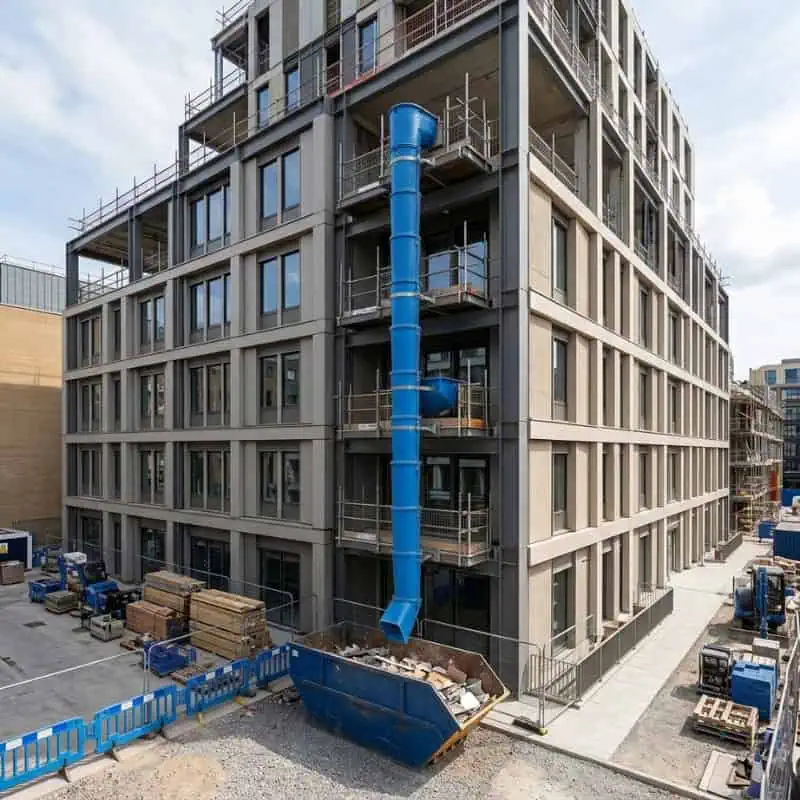
If you’re planning waste removal on a multi-storey job, a rubbish chute is one of the simplest ways to get debris off the building quickly and safely, but only if it’s the right size. Get the diameter and height right, and it just works; get them wrong, and you have blockages or a chute that doesn’t reach. Conveying & Hoisting Solutions supplies chutes for hire across Sydney, and this guide explains how to choose the diameter and height you need, with a simple checklist to run through. If you’re ready to sort waste removal, our rubbish chute hire in Sydney is a good place to start.
| Quick answer
Match chute diameter to your largest debris, as standard construction chutes are around 500 to 600mm, and match height to your building’s storey count using stacked modular sections with intermediate hoppers. Confirm both with your supplier so the stack, hoppers and restraints suit the drop and site access. |
How is rubbish chute diameter chosen?
Diameter is really about what you’re throwing down the chute. The rule of thumb is to match the diameter to your largest piece of debris, so material passes through freely without jamming. Standard construction rubbish chutes are commonly around 500 to 600mm in diameter, which handles the mixed building debris of most renovation and construction jobs, offcuts, rubble, packaging, plaster and general waste, comfortably. If your debris is bulkier, you’ll want to think about whether it will pass or needs breaking down first. Getting diameter right matters because a chute that’s too narrow for the material clogs, which stops the flow and creates a hazard as workers try to clear it, defeating the purpose of having a chute at all. It’s also worth thinking about flow: a suitable diameter keeps debris moving smoothly from top to bottom. When you enquire, describing the kind and size of debris you’ll be putting down the chute lets your supplier confirm the right diameter, so material drops straight through to the bin below without hold-ups.
How is chute height and length built up?
Height is the other half of sizing, and the beauty of a construction rubbish chute is that it’s modular. Rather than being one fixed length, a chute is built up from individual sections that stack together, one below the next, so the chute is assembled to reach the height you need, storey by storey, from the top level down to the bin at ground. This means the same system suits a two-storey job or a taller building; you simply use the number of sections required for the drop. For taller chutes, intermediate hoppers are added at points down the run, which let debris be loaded in at different levels rather than only at the top, so several floors can feed the same chute. On a tall drop, restraints and proper securing keep the stacked chute stable and controlled against the building or scaffold. The key point is that height is flexible and built to suit your building, so when you enquire, knowing your storey count and where you need to load in lets the chute be configured to reach and to serve the right levels.
Chute materials and site conditions
Not all chutes are built to the same standard, and on a working site that matters. Conveying & Hoisting Solutions manufactures its own Australian-made rubbish chutes, built stronger to stand up to the demands of construction sites, where chutes take a constant battering from heavy, sharp and abrasive debris day after day. A robust, well-made chute lasts and performs where a flimsy one would wear or fail. Depending on the job, there can be a place for both lighter-duty and heavier-duty use: a light strip-out producing mostly soft waste is different from heavy demolition sending down rubble and masonry, and the build should suit the material and the intensity of use. The point to take away is that a chute is a piece of working equipment exposed to tough conditions, so its strength and quality of manufacture are worth considering alongside its size. Choosing a well-made, appropriately robust chute means it handles your debris reliably for the length of the job rather than becoming a problem itself.
Installation and safety
Getting a chute set up correctly is as important as sizing it. Depending on the job, chutes can be delivered and installed for you, or supplied for your own crew to fit, so it’s worth deciding which suits your site and resources. Either way, the chute needs securing properly to the scaffold or facade, with the sections connected and restrained so the stack is stable, particularly on a tall drop where an unsecured chute is a serious hazard. Getting the chute sections up to height in the first place is its own task, and a material hoist hire is a practical way to lift the sections and gear into position on a multi-storey job. At the base, position the bin or skip directly under the discharge so debris drops straight in, and keep the area around it clear and controlled, since material arriving at speed needs a safe landing zone. Set up well, a chute runs cleanly and safely throughout the job.
A quick sizing checklist
Before you enquire, running through a few quick questions makes it easy to get the right chute configured first time:
- How many storeys does the chute need to serve, so the height and number of sections suit the drop?
- What’s your largest and most typical debris, so the diameter passes it without jamming?
- Where do you need to load in, so intermediate hoppers can be placed at the right levels?
- What bin or skip will sit at the base, so the discharge lines up with it?
- Do you want it delivered and installed, or supplied for your crew to fit?
With those answers ready, we can configure the right chute for your job quickly. Tell us about your building and waste for our rubbish chute hire in Sydney and we’ll sort the diameter, height and setup to suit.
Frequently asked questions
What size rubbish chute do I need?
Size is set by two things: diameter and height. Match the diameter to your largest debris so it passes without jamming, with standard construction chutes commonly around 500 to 600mm, and match the height to your storey count using stacked modular sections. Describing your debris and building lets your supplier confirm the right size for the job.
How tall can a rubbish chute be?
A construction rubbish chute is modular, built from sections that stack together, so it can be assembled to reach the height of your building, storey by storey. For tall drops, intermediate hoppers let several levels feed the chute, and restraints keep the stack secure. In effect, the height is configured to suit your building rather than fixed.
Are your rubbish chutes Australian made?
Yes. Conveying & Hoisting Solutions manufactures its own Australian-made rubbish chutes, built stronger to handle the demands of construction sites and the heavy, abrasive debris they carry. Depending on your job, they can be delivered and installed, or supplied for your own crew to fit, so the setup suits your site and resources.
Final thoughts
Choosing a rubbish chute comes down to two things: a diameter that passes your largest debris, commonly around 500 to 600mm, and a height built up from modular sections to suit your storeys, with hoppers and restraints for tall drops. Confirm both, and waste leaves the building cleanly. Tell Conveying & Hoisting Solutions your load, site access and timeframe and we’ll match the right gear; then request a quote today.
| Conveying & Hoisting Solutions
Planning waste removal on a multi-storey job? Tell us your load, site access and timeframe, and we’ll match the right hire gear for the job. |