The decision most foremen wrestle with
Equipment budgets are tight, deadlines tighter, and no one wants an idle machine chewing through cash. Choosing between a short-burst rental, an extended hire, or an outright purchase can close that margin gap. Yet many Australian site managers still lean on habit rather than facts.
For teams that already know they need a conveyor for hire, our modular units ship nationwide and can be booked in minutes.
Early clarity pays off, so we’ve broken down the real-world numbers, hidden line items and risk factors shaping the decision this year. Whether you’re shifting soil on a two-week backyard dig or moving demolition waste on a year-long commercial build, you’ll see where hiring has the upper hand.
Why short bursts suit tight programs
Short-term hire, typically for projects under eight weeks, remains popular on residential knockdowns, pool digs and event set-ups. Recognising signs your jobsite needs a conveyor can help teams improve material handling and reduce manual labour during these shorter projects. Three things keep it cost-effective.
- Mobilisation remains streamlined
You’re billed only for days on site, not the weeks waiting for back-charges or servicing. Your cash flow reflects the actual dig window, not the month-long buffer most suppliers demand. - Maintenance risk stays with the supplier
If a belt tracking issue pops up, the hirer replaces it at their expense. That’s one less delay your crew wears. - Compliance is baked in
Modern hire fleets are refreshed annually, so you avoid the surprise upgrade often needed to meet revised Work Health and Safety regulations.
Short-term hire makes even more sense when you must thread gear through terraced yards or strata hallways—spaces where standard skid steers and tipper access vanish. Portable 240-volt conveyors slot straight in, do the job, then clear out before neighbours complain.
Where extended hire comes into its own
We’re seeing a rise in 6- to 18-month conveyor rentals on civil remediation and infrastructure packages. Why not buy? Four subtle advantages keep long-term hire attractive.
Flexibility to right-size
Construction programs change. Rent for nine months, scale up or down mid-contract, and swap units without a capital write-down.
Predictable monthly cost
Hire spreads the outlay evenly instead of front-loading capital. Finance teams prefer a clean operating expense, especially when interest rates hover at multi-year highs.
Latest spec equipment
Safety features such as emergency e-Stops, emergency pull wires and guards keep updating. A hire agreement rolls those improvements into the rate rather than forcing you to retrofit.
Tax deductibility
Operating leases are usually fully deductible each year, while purchased machinery must be depreciated over time. Your accountant will confirm the numbers for your entity, yet most directors favour the immediate deduction.
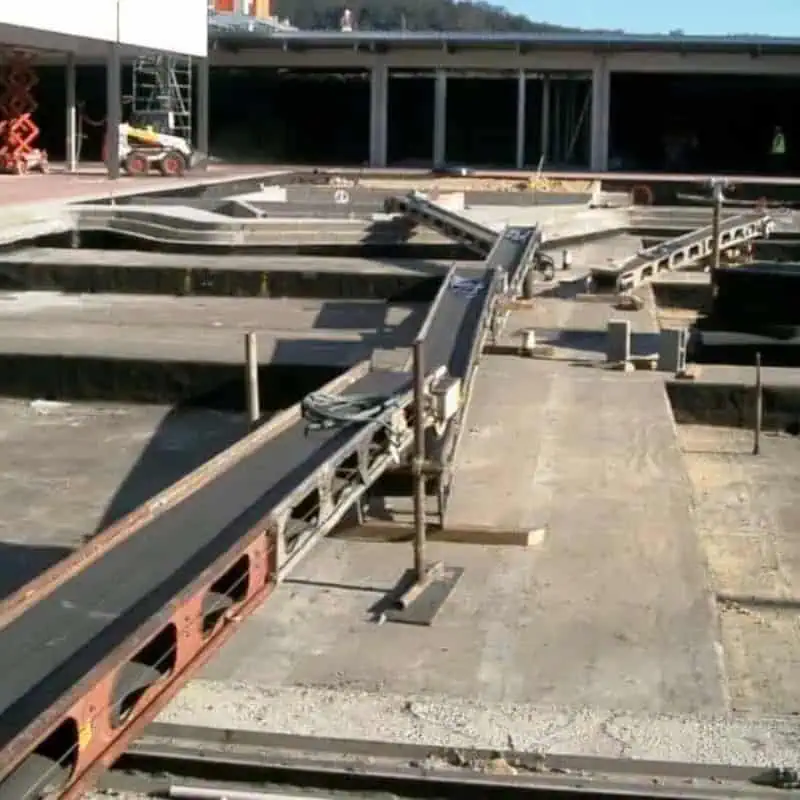
Projects like basement excavations under busy CBD streets illustrate the point. You might start with a 6-metre belt, realise you need a second incline conveyor to clear spoil over a retaining wall, then pare back to one unit for backfilling. Long-term hire gives you that wiggle room.
Hire or purchase costs side by side
Even seasoned estimators misjudge the total ownership cost of a conveyor. Purchase price is only half the story. The table below uses indicative 2026 market figures to show the relative weightings rather than hard dollars.
| Cost component | Short-term hire | Long-term hire | Purchase (outright) |
| Up-front capital | Very low | Low | High |
| Monthly cash flow | Higher per day, limited term | Moderate, predictable | Low after year one |
| Maintenance & parts | Included | Included | Your responsibility |
| Compliance upgrades | Included | Included | Your responsibility |
| Storage between jobs | None | None | Warehouse or yard space |
| Asset depreciation | Not applicable | Not applicable | On your books |
| Flexibility to scale | High | Very high | Low |
| Tax treatment | Deductible hire expense | Deductible hire expense | Depreciation only |
For most contractors, the tipping point sits around the 24-month mark. Keep a conveyor longer than that and ownership may edge ahead—provided you have consistent utilisation lined up.
Hidden factors people forget
A quick spreadsheet rarely captures downtime, transport and labour disruptions. These three oversights crop up in post-mortems more than any others.
Transport back-charges
If you buy, you still pay tilt-tray or crane trucks every time the machine moves. Hired units often bundle delivery or charge a reduced relocation fee when swapping sizes.
Site storage headaches
Conveyors hate sitting in the weather. Purchased units need a dry lock-up or you’ll be replacing belts and motors well before the expected life cycle.
Obsolescence risk
Motor efficiency standards and guarding rules keep tightening. A belt that’s compliant today may need guarding extensions next year. Hire sidesteps that rolling compliance bill.
A quick checklist before you commit
Skip the lengthy procurement meeting. Run through these eight prompts, and you’ll see whether hire or buy fits.
- How many continuous weeks will the conveyor run?
- What percentage of the year will it sit idle?
- Is there safe, dry storage on site or at your depot?
- Will project scope changes require extra length or different belt widths?
- Are your electricians approved to service 240-volt drives?
- Do you hold spares for bearings, belts and guards?
- Have you budgeted for annual inspections under WHS regulations?
- Could an operating lease free up capital for higher-margin items?
If most answers lean toward flexibility and risk reduction, hire wins. If utilisation sits near 100 per cent for two years and storage is cheap, ownership may work.
Safety and compliance never stand still
Machines that handle bulk material sit under a web of national codes and state regulations. Safe Work Australia’s machinery guidance summaries the must-haves for guarding, emergency stops and isolation procedures. Anyone buying equipment in 2026 must budget for retrofits every time those codes shift. Hiring passes that headache to the fleet owner, whose livelihood depends on supplying gear that lines up with the latest machinery safety standards.
Making the call
Short-term conveyor hire shines when timelines are tight, scopes change and cash flow matters. Long-term hire keeps that advantage alive on bigger builds, smoothing monthly costs and dodging maintenance risks. Buying only edges ahead once you’ve locked in multi-year work, storage, and internal servicing skills.
Treat the decision less like a purchase and more like a logistics puzzle. Map utilisation, tally hidden costs and keep the compliance horizon in view. Get those three inputs right and the numbers answer themselves.