Why 2026 Raises the Bar on Rooftop Work
Recent updates to the AS/NZS 1891 series mean contractors should review their height safety equipment, inspection records and work procedures to ensure they remain compliant with current requirements. In practice, many principal contractors and site managers are placing greater emphasis on documented equipment inspections, maintenance records and safe work practices before rooftop work begins.
That shift has more crews rethinking whether the harnesses sitting in the ute tray are still fit for duty. A growing number are opting for roofing harness kit hire because the rental fleet is routinely refreshed and pre-inspected, giving workers immediate compliance without the capital outlay.
When a Harness Has Reached the End
Standards list hard limits – ten years from the manufacture date is the ceiling for most full-body harnesses – but practical retirement often comes sooner. While every harness should be inspected by a height-safety technician, the day-to-day crew can pick up early cues:
- Frayed stitching around critical load paths, especially near the dorsal D-ring
- Webbing that feels stiff, sun-bleached or smells of solvents
- Loose or distorted buckle tongues that no longer seat cleanly
- Labels that are unreadable, removing proof of conformity
- A history file that can’t show a six-monthly competent inspection
If even one of these signs shows up, treating the harness as a write-off is usually cheaper than risking a site shutdown or, worse, a fall.
Picking the Right Hire Kit for 2026 Projects
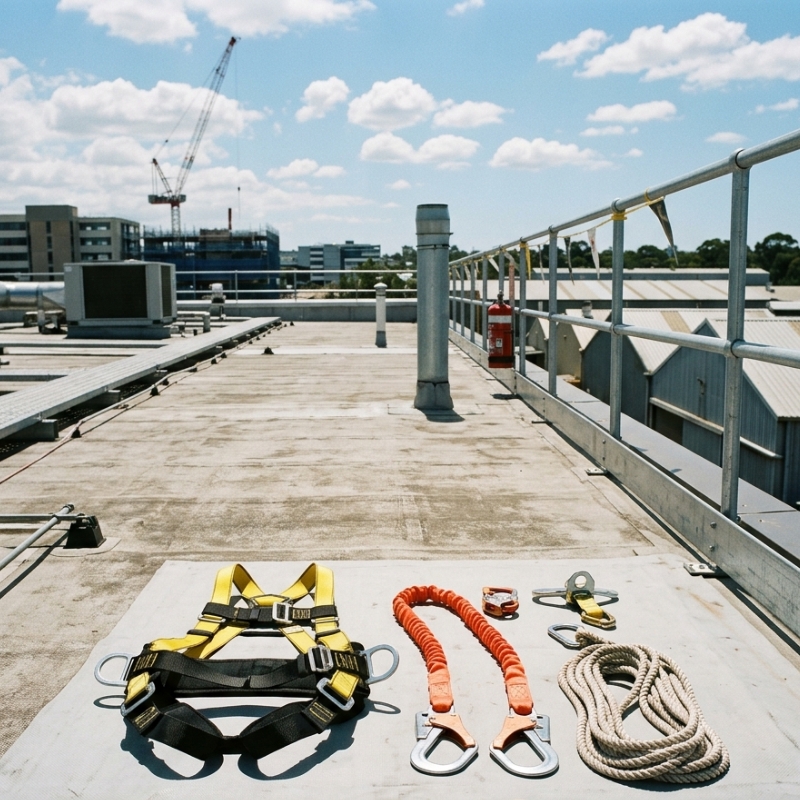
Not every harness kit suits every roof. Knowing how a roofing harness kit improves safety for roof work comes down to choosing the right configuration for the pitch, surface and job length rather than grabbing the closest bag on the rack. Two trends stand out for the year ahead.
Lighter, Breathable Webbing
Manufacturers have trimmed weight by switching to high-tenacity synthetic fibres and ventilated back pads. Crews working through an Australian summer appreciate the drop in sweating and chafing, and lighter gear often means faster donning checks.
Integrated Edge Protection Short Lanyards
Edge-tested, 1.5-metre twin lanyards with built-in energy absorbers now dominate hires for metal deck work. The shorter length keeps the shock pack away from the ground during a fall arrest, helping meet clearance requirements on single-storey houses.
Beyond those upgrades, look for:
- Quick-link shoulder adjusters that can be operated with gloved hands
- Contrast stitching so that damage stands out during visual checks
- A kit logbook that shows the last service date
Hire or Buy? A Straightforward Comparison
A new premium harness kit typically costs four figures once you add twin lanyards, rope lines, anchor straps and a sturdy bag. Factor in six-monthly inspections and periodic recertifications and the ledger tips further. Hiring, on the other hand, spreads expenses across active job days and folds servicing into the fee.
| Aspect | Owning Gear | Hiring Gear |
| Up-front cash | High capital spend | Low – pay per week or per month |
| Inspection duty | Organise and pay a height-safety technician | The rental company handles inspections |
| Asset tracking | Maintain registers and retirement dates | Automatically renewed stock |
| Flexibility | Locked into one configuration | Choose the best setup per project |
| Disposal at end of life | Owner responsibility | Rental company absorbs cost |
Crews that work at height daily still see merit in keeping a small inventory, but many roofers who juggle height and ground tasks prefer to hire and redirect capital to core plant such as nail guns or tile elevators.
Keeping Gear Compliant Between Hires
Even the newest kit can slip out of spec if it is handled roughly on-site. A few simple habits preserve safety and protect the bond:
- Stow harnesses in a dry crate rather than tossing them on sharp sheet metal.
- Tag any harness that cops a fall arrest and return it for post-fall inspection.
- Use mild soap and warm water to clean concrete dust; solvents degrade fibres.
- Record the site location and date in the logbook supplied with the kit.
Further reading on mandatory inspection intervals and anchor-point loads is set out in the Safe Work Australia guidance, which most state WHS regulators reference directly.
Final Word
The 2026 compliance landscape nudges every trade business toward sharper height-safety decisions. Retiring worn harnesses on time and selecting the right hire kit saves paperwork, prevents site delays and, most importantly, protects lives. Investing a little thought before stepping onto the roof is still the simplest way to keep every worker heading home uninjured.