
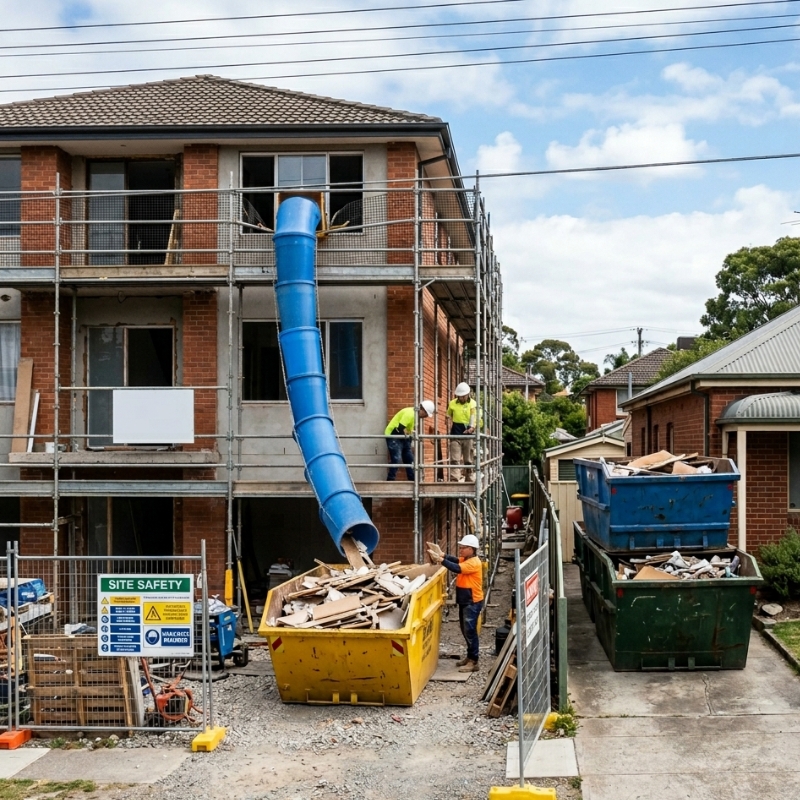
Got a renovation up high? It turns into a complicated clean-up fast. There’s debris—broken bricks, timber bits, plasterboard—and all that packaging. It needs a safe exit from the top floors. And let’s not burn through work hours or tick off the neighbours. So, what’s the move? In Australia, you generally have two choices: either park a skip bin on the ground and haul stuff down or rig up a temporary rubbish chute for a straight shot into the bin below.
Each has its upsides, keeping you above board while sorting through different issues. Before jumping in, think about the main stuff—access, speed, labour, safety, permits, noise, and green practices—to see what suits your reno. If you’re leaning towards a chute, you might want to know more about temporary rubbish chute hire, but first, let’s size them up side by side.
1. Site Access: Is Your Workspace Cramped?
Renovating multiple stories up? It’s like navigating crowded city streets—tight lanes, shared spaces, limited room. Skip bins need a flat spot for drop-off and pick-up, plus the truck needs room to lift the bin.
Rubbish chutes, on the other hand, are often made from light plastic or fibreglass sections that snake down the building or through the core, going straight from the workspace to a bin or truck parked wherever you can fit it. If the only spot for a bin is 15 meters from the building, a chute can span that gap without a lot of manual dragging.
Here’s a tip: In older city areas with lots of terrace homes, chutes can drop waste right into a skip in a back alley, sparing workers from hauling through a whole house.
2. Labour and Time: Who’s Doing the Heavy Lifting?
You might underestimate the trips the stairs can cause with debris. Carrying timber or bags of rubble down a few flights seems fine at first, but stretch it over a two-week demolition, and it wears you down—and can be dangerous.
A rubbish chute turns it into a solo task: one person loads the chute, lets gravity handle it, and gets back to work. Skip bins demand more trips—lugging debris down, hoisting it over bin walls, or using a pulley for bags. The labour hours stack up, often making chutes more economical, especially when working above the first floor.
But, if it’s a smaller job—like pulling out a kitchen from a first-floor unit—it might just be quicker to hand-carry stuff to a mini-skip than set up a chute.
3. Safety and Compliance: Avoiding Falls, Strains, and Following Rules
Working up high, moving heavy loads, and flying debris all catch SafeWork Australia’s eye for construction safety. They’re keen on “moving construction waste safely” in their guidelines.
Key Risk Comparison
| Risk Area | Skip Bin Only | Rubbish Chute + Skip Bin | Mitigation Tips |
| Manual-handling strains | Carrying heavy or awkward loads | Reduced strain—focus on short lifts into the chute | Use buckets with side handles; space out loads |
| Falling objects | Low risk if hand-carried | Potential if the hopper is not secure or the chute is damaged | Secure chute frame; put guard rails around the discharge |
| Dust exposure | Dumping from height stirs up dust | Mostly contained in the chute | Wet dusty loads; seal chute sections well |
| Noise complaints | Loud clatter when items hit the metal bin | Softer “whoosh” sound | Use rubber mats inside the bin; line the chute with chains for sound damping |
Whatever your choice, you’ll still need safety gear, signs, and a Safe Work Method Statement (SWMS). It’s all about handling your biggest risks—whether that’s lifting stuff or managing where it falls.
4. Permit and Neighbour Concerns
Skip bins on public land are seen as “obstructions” by most Aussie councils, needing permits. Fees depend on your postcode, and some councils want flashing lights or reflective barriers at night.
Chutes typically don’t need separate permits if the connected skip is approved. But if a building manager or strata committee is involved, you might need to plan for vibration or facade protection if the chute hangs outside. In CBD high rises, placing the chute in an internal light well can sidestep both council and strata issues, but might require more steelwork to anchor it safely.
And those neighbours: Skip bins can make a racket when stuff hits them early in the morning. Chutes also make noise, but adding chains or rubber flaps inside can dampen it. Plus, chutes keep dust from blowing into neighbouring areas compared to open dumping.
5. Cost Influences (Without the Price Tag)
Costs vary by region and season, but here’s what can affect the price for each option.
| Influencer | Skip Bin Impact | Rubbish Chute Impact | Notes |
| Waste volume | Bigger bins or more swaps | Extra chute length or more hoppers | Over 8–10 m³ on upper floors often makes chutes cheaper |
| Hire duration | Daily or weekly bin fees | Weekly chute hire plus scaffold ties | Long projects save on fewer bin swaps |
| Transport distance | Truck delivery and pickup | Same bin fees; chute delivery in a smaller vehicle | Remote sites may face extra distance charges |
| Material type | Heavy waste brings surcharges | The same bin surcharge applies | Separate recycling chutes can cut landfill costs |
| Set-up labor | Minimal—truck drops bin | 1–2 hours to assemble a chute, usually once | Labour cost recouped by quicker waste removal |
Projects over two stories with more than 8–10 cubic meters of waste often find chutes with a single medium skip more cost-effective than constantly swapping bins.
6. Quick Comparison Table
| Factor | Skip Bin Only | Rubbish Chute + Skip Bin |
| Site access | Needs truck access near the work zone | Skip can be placed further; the chute bridges the gap |
| Labor hours | High: repeated trips | Low: gravity takes over |
| Manual-handling risk | Strains and slips on stairs | Reduced to mainly the chute inlet |
| Falling-object risk | Low if waste is hand-carried | Needs a secure hopper and a managed discharge zone |
| Noise on site | Loud clanging | Duller “whoosh”; liners lower noise |
| Dust control | Open dumping releases dust | The enclosed chute contains most of the dust |
| Council permits | Usually needed on public land | Only for skip; chute is mostly unregulated |
| Typical fit | Ground-floor or small demos | Multi-story, tight-access, high-volume jobs |
This table helps, but remember—every site’s got its quirks. Think about your project size, crew, site rules, and how much stair climbing you want to avoid.
7. Watch Out for These When Picking Your Waste Method
- Ignoring stair wear
Dumping timber or rubble bags on wooden or tile steps can quickly chip them. Check repair costs if you’re thinking of the carry-to-skip route. - Underestimating bin swaps
Two smaller skips might cost more in transport than one larger bin with a chute. Get the volume right—don’t guess. - Overloading the chute hopper
Gravity helps, but it’s not forgiving. Feed materials steadily to avoid jams; never shove whole doors or long pallets down at once. - Skipping installer checks
Some builders try to attach chutes themselves to scaffold tags. Without good fixings, the chute can swing or come off in strong winds. - Forgetting recycling goals
If your aim is 80% recycling, plan for separate skips or chute sections to sort timber and masonry.
For more on chute operations and what to avoid, read up on why to use a rubbish chute on site.
8. Questions to Help You Decide Quickly
- • What’s the cubic meter count of waste for your demolition stage?
- Can a skip truck park right by the building the whole time?
- Are stairs or lifts safe and clear for debris transport?
- Any strong points on site for a chute frame?
- Will neighbours be irritated by a long-term curbside bin or early noise?
Answering these narrows down the best, most compliant, and least annoying option.
9. FAQs
1. Do rubbish chutes need scaffolding, or can you attach them to buildings?
They mostly use a steel frame hooked to scaffolding, but on smaller sites, they can anchor to strong balconies or parapets with heavy-duty brackets. The supplier usually checks the fixing points before delivery.
2. What if the chute gets blocked during use?
Stop loading, clear the area below, and clear the blockage top-down. Don’t hit the chute sides; it risks cracking sections or loosening bolts.
3. Are skip bins still necessary if I have a rubbish chute installed?
Yes, the chute just funnels waste into a ground-level bin. You might swap bins less or need a smaller one, saving costs.
4. Which option is quicker to set up on the first day?
A skip bin is usually quicker since a truck just drops it off. Chutes take a couple of hours to set up, but they save time on labour over the project.
5. Can I mix asbestos waste with other debris down a chute?
No way. Asbestos needs separate handling in sealed bags under strict rules. Consult a licensed removalist and follow state laws instead of using a chute.
Final Thoughts
Choosing between a skip bin and a rubbish chute isn’t about finding the “better” tool—it’s about matching the method to your renovation challenges. Jobs at ground level with modest waste often mean a skip is enough. But when debris needs to go downstairs—or when labour efficiency and safety matter—a chute can be worth it.
Still deciding? Check access points, estimate waste accurately, and think through labour for both methods before locking in your plan. A little prep now saves on extra swaps, sore muscles, and irked neighbours later.