
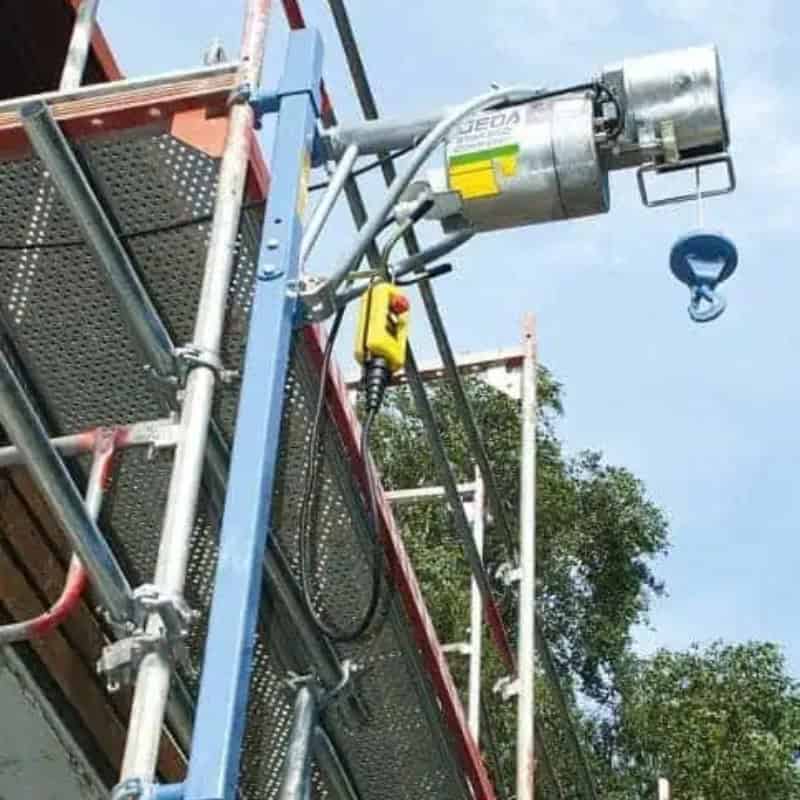
Renovating a three-storey terrace in Sydney or refreshing a five-level office block in Brisbane means moving plasterboard, glazing and fix-out supplies up narrow shafts and past busy footpaths. A rope hoist can trim hours off every shift and cut manual-handling risks, yet not every unit on the hire list will suit your site. The tips below distil the questions builders around Australia ask just before they pick up the phone and book a quality rope hoist for 2026 projects.
Why Rope Hoists Fit Renovation Work So Well
Older buildings rarely give you the clear vertical runs that new-build apartments enjoy. Stairwells twist, balconies jut out and laneways stay open to pedestrians. Rope hoists shine in that environment because the drive unit stays on the ground, leaving only a lightweight rope, sheave and hook above. This smaller footprint means:
- Fast setup without cranage
- Minimal facade penetrations – often a single scaffold tie-off point
- Easy relocation as the program shifts from demolition to fit-out
Material hoists still have their place, yet a rope hoist’s slim profile often makes the difference between closing a lane and keeping the council happy.
Key Selection Factors for 2026 Projects
Manufacturers have refined rope hoist technology over the past few seasons. Variable-speed drives, wireless pendants and overload sensors now ship as standard on many units. When you speak with your hire partner, focus on the following four areas rather than the headline safe working load.
Available Fixing Points
Multi-storey refurbs seldom let you weld lugs onto structural steel. Check whether the hoist’s top sheave can clamp to scaffold standards, a parapet clamp or a purpose-built runway beam. Measure facade thickness and parapet height early; it decides which fixing kit you need and avoids site delays on day one.
Lift Height and Rope Diameter
It sounds obvious, yet it still trips teams up: longer ropes sag more. On a six-storey sandstone facade, a 9 mm rope may deflect enough to kiss scaffold planks. Switching to an 11 mm line or choosing a model with a central guide roller keeps the hook plumb and protects the load.
Duty Cycle Versus Project Timeline
A mid-tier renovation usually runs five to six lifts an hour, eight hours a day. Light-duty hoists cope well for a fortnight of demolition debris but struggle across a year-long heritage restoration. Ask for the manufacturer’s ED (equivalent duty) rating; anything under 20 % may cook its motor before tiling starts.
Smart Safety Add-Ons
In 2026, most leading units integrate CAN-bus load cells and auto-stop sensors as plug-and-play modules. The extra spend is small compared with the downtime a WorkSafe inspector can impose after an overload incident. If your client’s contract carries liquidated damages, the upgrade pays for itself on the first avoided shutdown.
Matching Hoist Capacity to Renovation Stages
Early demolition throws out mixed waste in skip bins. A 500 kg hoist paired with a certified rubbish skip is usually ample. Once steel beams and glazing arrive, loads jump closer to one tonne, yet frequency drops. Instead of upsizing, many contractors hire a twin-speed 600 kg unit that creeps for heavy beams and flies for bags of cement. Mid-program flexibility matters more than peak rating.
One of our most-read resources, the internal renovation tips blog explains how shifting site logistics influence gear choices across the build.
Site Constraints and Safety Compliance
Most Australian states now follow the national construction code’s guidance on hoist operation zones. The 2026 update introduced clearer barricade heights (1.2 m minimum) and mandatory load-path exclusion zones. Factor these rules into scaffold design early; shoe-horning a hoist beside a heritage parapet after scaffold handover rarely ends well.
Noise caps and dust suppression also push decisions. New inverter-driven motors whisper compared with legacy contactor units. If night shifts feature in your programme, choose a hoist that stays under the 65 dB site limit to avoid council complaints.
Ground bearing pressure often slips off the radar. A rope hoist’s base frame may carry two tonnes when spooling a full basket off the deck edge. Check slab strength—particularly in 1970s carparks—so the engineer can specify spreader plates before pour-backs hide the reo.
Final Checks Before Ordering
- Confirm the hire firm supplies test certificates dated within the past six months.
- Request a pre-start pack that includes electrical tag dates and overload calibration sheets.
- Lock in delivery windows that match scaffold completion; idle plant burns budget.
- Nominate a competent person for weekly inspections to keep paperwork tidy for audits.
Following those steps saves frantic phone calls on Monday morning and keeps the renovation timeline intact.
External Guidance for Extra Peace of Mind
Safe Work Australia’s Model Code of Practice for Construction Work sets the baseline for hoist inspections, barricading and operator training. If you need chapter-and-verse before site induction, download the latest PDF from Safe Work Australia’s construction code of practice.
Choosing a rope hoist is less about chasing the biggest number on the spec sheet and more about matching real-world site quirks to the right blend of capacity, duty and fixing gear. Nail those details now, and your team can keep materials flowing smoothly up the scaffold long after the first-day excitement fades.