Belt choice keeps blowing out timelines
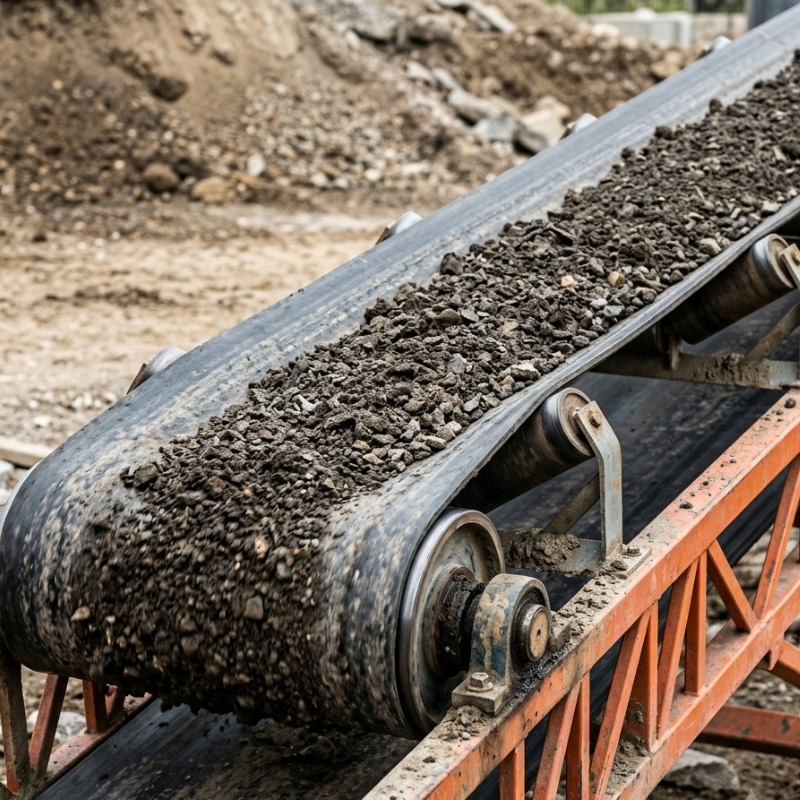
Portable conveyors have become a fixture on Australian sites, yet last-minute belt swaps still delay hand-overs. Contractors often pick whatever unit happens to be available without double-checking the belt spec. The mismatch shows up when wet spoil keeps sliding backwards, or demolition rubble chews through a light-duty belt in a fortnight. The irony is that the right gear is almost always sitting on a hire yard rack – you just have to ask for it. When you organise your next conveyor hire, start by matching belt profile, material and width to the task rather than treating the whole conveyor as a single line item.
Load characteristics decide the belt, not the frame
Most mobile conveyors on hire fleets share a common aluminium or steel chassis, so builders assume the belt is interchangeable. It isn’t.
- Low-angle chevron belts suit dry sand or aggregate under 40 mm. The raised profile grips light, free-flowing material and prevents rollback on inclines up to around 30 degrees.
- Flat, smooth belts carry bagged product or formwork panels where surface scuffing would scratch finishes.
- Deep, widely spaced cleats handle sludge, wet clay and sticky spoil because they create mini-pockets that stop slippage.
Swapping a flat belt for a chevron after the conveyor has been craned to the eighth-floor slab wastes hours. Choosing which conveyor loading system is best for your site begins with understanding the bulk density, moisture content and flow characteristics of the material before you even raise the purchase order.
Site conditions are changing – and so should your belt pick
Tighter environmental rules now push builders to contain run-off and dust. That shift affects belt selection as much as water carts and silt fencing.
Weatherproof covers are no longer optional in many CBD projects. If the conveyor runs under sheeting, heat build-up can soften PVC belts unless you specify a high-temperature compound. Conversely, uncovered outdoor runs in the Pilbara need UV-stabilised rubber to avoid micro-cracking within a single dry season.
The same thinking applies to incline. Lifts over five storeys call for a wider belt and a larger 415 V drive to keep throughput steady. Builders who try to stretch a compact 240 V unit beyond its sweet spot end up throttling flow, which forces crews to double-handle spoil in wheelbarrows – the very work the conveyor was hired to avoid.
Swapping a flat belt for a chevron after the conveyor has been craned to the eighth-floor slab wastes hours. Choosing which conveyor loading system is best for your site begins with understanding the bulk density, moisture content and flow characteristics of the material before you even raise the purchase order.
Overlooked standards are about to tighten
Safe Work Australia’s draft update to the Plant Code of Practice includes specific language on guarding portable conveyors. Once adopted, belt edges above 1,600 mm will require continuous side guards rather than the current 750 mm rule of thumb. If you’re planning projects to start in late 2026, factor in extra clearance for bolt-on panels or choose a hire unit designed with fold-down guards.
Fire resistance is another sleeper issue. Some councils already request an FRAS-rated belt in basements where hot works and conveyors operate in the same zone. Manufacturers supply these belts, but hire companies carry limited stock because uptake is still low. Book early if the spec can’t be waived.
Getting the conversation right with the hire yard
Rental desks field the same belt question every week: “What have you got that’s 10 metres long?” A better opening line is: “We need to shift 45 tonnes of wet clay per hour up 4 metres inside a 900 mm gap.” Those details let the supplier confirm belt type, motor power and guarding in one call. The result is a quote that actually matches the job instead of a conveyor that needs modifying on-site.
| Information to bring | Why does the hire yard need it |
| Material type, density, and moisture | Confirms belt profile and compound |
| Required throughput (t/h) | Determines motor size and belt width |
| Incline height & angle | Checks drive power and cleat height |
| Access photos & measurements | Flags guarding mods, chute clearances |
Bring photos of the access route and the material stockpile. Experienced hire staff can spot trip hazards, overhead obstructions, and transfer chute angles that the project team might overlook. A five-minute walk-through prevents half-day stoppages once concrete pours or scaffold erecting begins.
Sustainability credentials now influence belt choice
Circular-economy policies are filtering down through tier-one contractors. Gear that can be returned in working condition with minimal consumable waste earns preference during tender scoring. Belts with modular pin-join sections allow damaged cleats to be swapped out rather than scrapping the whole loop, reducing landfill and invoice totals alike. If your principal contractor is counting every kilo diverted from disposal, ask whether the hire yard stocks modular belts and keep the receipt for replacement segments as evidence.
Packaging matters too. Reusable stillages beat single-use timber crates, especially when conveyors move between regional sites where recycling services are thin. Ask the hire company to deliver belts in collapsible cages you can send back on the same truck that collects the conveyor.
Safety never rests on the belt alone
Even the best-matched belt fails if tensioning is ignored. Portable conveyors lack automatic take-ups, so slack appears as belts warm under load. Schedule a quick visual check before each smoko break: if the carry side sags more than a hand-width, re-tension. Include spare splice pins in the toolbox; they cost a fraction of the downtime caused by a laced joint that parts under shock load.
Updated guarding rules will dovetail with existing obligations under section 19 of the Model Work Health and Safety Act. The latest guidance from WorkSafe conveyor safety guidelines makes it clear that contractors, not hire firms, bear the primary duty of care once equipment reaches the site. Budget time for an induction covering emergency stops, pinch points and lock-out tags before the belt starts turning.
Final word
Belt selection can feel like a footnote when schedules are tight, yet the wrong profile or compound still sends teams back to manual labour. Treat the belt as a consumable matched to load, incline and environment – not a one-size-fits-all accessory. Bring detailed material data to the hire desk, stay ahead of upcoming guarding and fire standards, and consider sustainable options where they align with project goals. Those extra five minutes spent on belt choice are worth days saved on rework and downtime once the conveyor is up and running.