A rope hoist and a material hoist both move loads vertically, yet each has a sweet spot. Pick the wrong unit, and you risk inflated hire costs, wasted hours and compliance headaches. The five situations below appear regularly on Australian building sites and almost always point to a rope hoist being the smarter choice.
When the load weight fluctuates daily
Material hoists shine when you are shifting pallets or consistent, bulky loads. They are built around a cage or platform and reach their efficiency peak when that platform is filled to its rated capacity time after time.
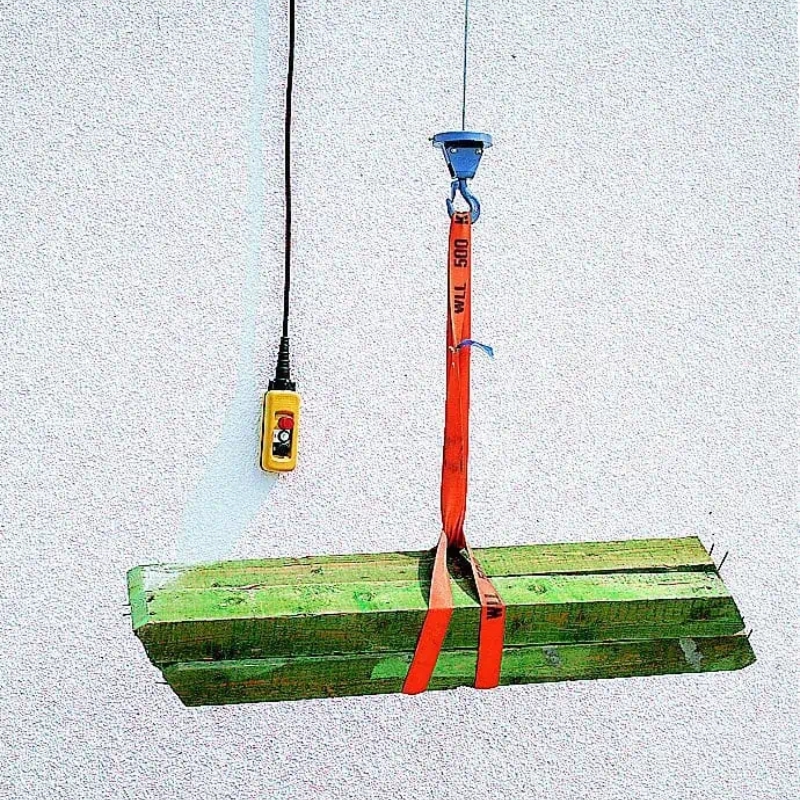
Fit-out projects and remedial works rarely follow that rhythm. One morning you might be hauling a couple of rolls of carpet, the next afternoon ten boxes of fixings, then a single air-conditioning compressor. A rope hoist handles these swings with ease because the hook system is not limited by a cage footprint. Crews simply attach the sling or lifting bar that suits the item, hit the pendant control and go. If that sounds like your schedule, rope hoist hire will usually deliver faster turns and less idle time.
Limited set-down space on upper levels
Modern CBD refurbishments often mean working inside narrow balconies, scaffold decks or roof spaces with minimal clearance. Sliding a full cage from a material hoist into those areas can be awkward or impossible. A rope hoist drops the load precisely where the rigger guides it, even through a partially glazed opening.
Builders renovating heritage facades report another benefit: less temporary removal of balustrades or decorative elements. Knowing rope hoists and their load limits allows contractors to match lifting equipment to the job safely, while the reduced footprint of the rope and hook avoids secondary make-good work that chips away at profit.
Frequent repositioning across the façade
A material hoist mast needs firm anchoring to the structure. Once erected, moving it even a few metres involves engineers, additional fixings and fresh concrete scans. In contrast, a rope hoist can be rolled along a scaffold run or bolted to another beam in an hour or two, then placed back in service after its post-move inspection.
This flexibility pays off on projects with staged cladding replacement or window installation, where the lift point keeps chasing the crew. For context, CHS installers recently shifted a 300 kg capacity rope hoist four times on a single hotel reclad without pulling the crew off the tools for more than half a day in total.
Irregular power access on site
Material hoists often draw higher amperage and, for larger cages, three-phase power. Fit-outs in older commercial towers and regional sites do not always have spare breakers or boards ready to go. A rope hoist typically plugs into a 240 V, 15 A point. Where mains supply is limited, a small generator can keep the lift running without blowing the site budget on temporary switchboards.
Electricians also appreciate the simpler setup: fewer extension runs and less tripping of circuits shared with lighting or climate control. That keeps other trades happy and the project timeline intact.
Safety compliance demands single-line lifts
The update to AS 2550.1 reinforced the need for clear sightlines and communication during lifting. Rope hoists deliver unobstructed views between the operator and the rigger. There is no cage wall, so spotting slung loads and confirming hand signals is straightforward.
WorkSafe inspectors have begun focusing on this during surprise visits, especially where multiple subcontractors share tight spaces. Minimising blind spots reduces the chance of suspended objects clipping scaffold standards or ductwork. If your project safety file already flags congestion risks, a rope hoist helps satisfy the hierarchy of controls without major redesigns.
Comparing rope and material hoists at a glance
| Feature | Rope hoist | Material hoist |
| Typical capacity | 200 – 500 kg | 500 – 2,000 kg |
| Power requirement | 240 V, 15 A single-phase | Often three-phase above 1,000 kg |
| Installation time | Around two hours on the scaffold | Half-day to full day, including mast tie-ins |
| Relocation effort | Quick, minimal re-engineering | Significant, may need new footings |
| Ideal load profile | Mixed, irregular shapes | Uniform, palletised materials |
| Upper-level clearance needed | Hook and sling only | Full cage width and depth |
Numbers are indicative and assume compliant rigging and site conditions.
Choosing the right hire partner
Once you decide a rope hoist suits your job, look for a rental company that supplies:
- Recent service logs and proof of six-monthly inspections.
- Pendant controls with emergency stop and upper-limit switches are tested before dispatch.
- Lift bars, spreader beams and certified slings sized for your load types.
- Quick-response technicians who can attend within 24 hours anywhere in Australia.
Conveying & Hoisting Solutions ticks those boxes and ships nationwide from depots in Sydney and Brisbane. Crews receive a laminated start-up checklist and a QR-code link to the user manual, reducing the learning curve for first-time operators.
Final checklist before you book
Run through these questions with your site supervisor or project engineer:
- Are most loads odd-shaped or lighter than half a tonne?
- Will the lift point move more than once during the build?
- Is three-phase power scarce or already allocated?
- Do upper levels have limited deck space for a cage?
- Has the safety plan highlighted visibility concerns around hoisting?
If you answered yes more than twice, a rope hoist is likely the safer, faster and more economical option. For detailed regulatory guidance, see the WorkSafe Victoria section on hoists and winches.