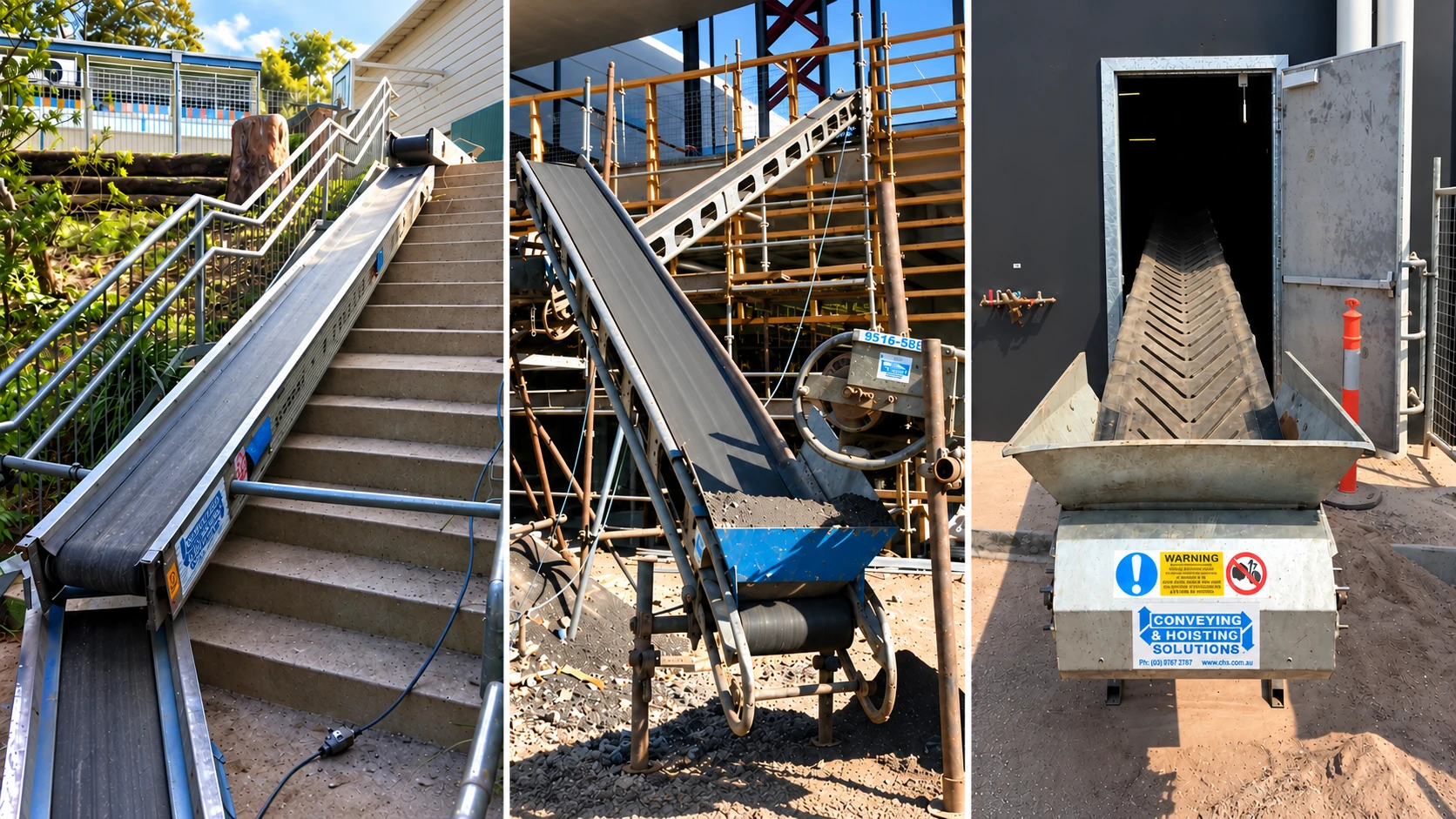
Hiring a conveyor can make moving materials around your worksite much easier. Whether you’re clearing dirt from a backyard, removing concrete rubble during a renovation, or shifting materials across a construction site, the right conveyor can save you hours of manual labour.
Before arranging conveyor hire, there are a few things you’ll need to consider to make sure you’re getting equipment suited to the job.
What type of material are you moving (e.g., dirt, concrete rubble, boxes)?
The first thing to consider is what you’ll be putting on the conveyor. Different materials have different handling requirements, and not every conveyor is suited to every job.
If you’re moving dirt, soil, sand, or concrete rubble, you’ll need a conveyor that’s built to handle the weight and rough nature of those materials. For lighter items like boxes or packaged goods, your requirements may be different.
It’s also worth thinking about how much material you need to move. A small backyard excavation is quite different from clearing out a large construction site. Knowing what you’re moving and roughly how much of it there is will help you choose a conveyor that can handle the workload.
What total distance or elevation change do you need to cover?
The distance your materials need to travel is another important factor when choosing a conveyor. You might need to move soil a few metres from an excavation, carry rubble through a narrow side access, or transport materials up from a lower level.
Portable conveyors are particularly handy for jobs where wheelbarrows are difficult to use or where access is limited. Depending on the distance, you may need a single conveyor or multiple units working together.
Elevation matters too. If you’re moving materials uphill or out of a basement, the conveyor needs to be suitable for the required incline. Steeper angles can affect how securely materials travel along the belt.
Before hiring, measure the approximate distance and height difference between where the material starts and where it needs to end up. This will make it easier to work out what equipment you need.
Do you require delivery, or will you pick it up?
Once you’ve worked out which conveyor suits your project, you’ll need to decide how to get it to your worksite.
Conveyor delivery can be a convenient option, especially if you don’t have a suitable vehicle or trailer to transport the equipment yourself. It means you can have the conveyor brought directly to your site without organising your own transport.
If you’ve got the right vehicle and would rather collect it yourself, conveyor pick-up may be a better option.
Keep in mind that conveyor setup is not included, so you’ll be responsible for positioning and setting up the equipment at your worksite. Make sure you’ve considered site access, available space, and where the conveyor needs to go before it arrives.
Conclusion
Choosing the right conveyor doesn’t have to be complicated. Start by working out what materials you’re moving, how far they need to travel, and whether you need delivery or prefer to collect the equipment yourself.
Having these details ready when enquiring about conveyor hire makes it easier to find equipment that suits your job. With the right conveyor, you can spend less time shifting materials by hand and more time getting the work done.