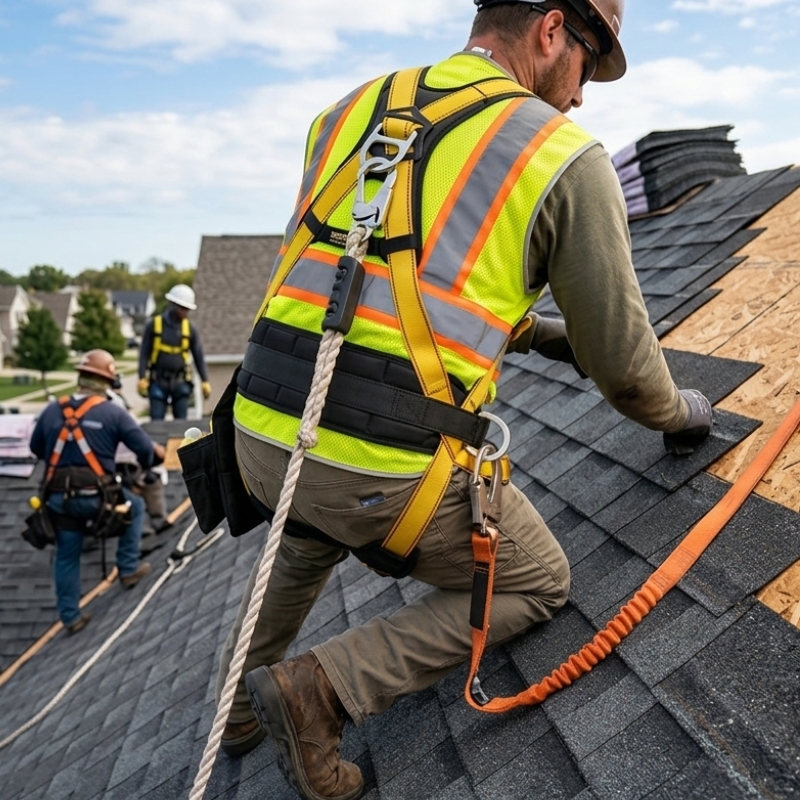
Working near roof edges remains one of the biggest fall-related risks on Australian worksites and even weekend DIY projects. A slip on damp Colorbond, a loose tile, or a momentary loss of balance while carrying tools can easily become a life-changing accident. A purpose-built roofing harness kit hire gives you a fall-arrest lifeline that can turn a potentially fatal drop into a controlled suspension with only minor bruises. Yet a harness kit does far more than clip you to an anchor point. When sized, fitted and connected correctly, it spreads impact forces through the body, keeps you facing upright, and allows teammates to perform a quick rescue. This article explains what is in a kit, why each part matters, and how to integrate the system into day-to-day roof work so safety becomes a habit rather than an afterthought.
1. Roof Falls in Australia: Why the Hazard Persists
Despite decades of awareness campaigns, falls from height still sit near the top of national workplace injury statistics. Safe Work Australia recorded 31 worker fatalities from falls in 2022, with roofing activities a consistent contributor. Several factors keep the hazard alive:
• Short-duration tasks where workers think “it will only take a minute”
• Temporary home repairs by untrained property owners
• Tight project timelines that pressure crews to skip secondary fixes like guardrails
• Unpredictable weather that turns acceptable surface grip into a skating rink within minutes
The national model Code of Practice for fall prevention recommends a risk hierarchy that starts with avoiding work at height altogether. When elimination, substitution and engineering controls (such as scaffolds or edge protection) are not practical, personal fall-arrest equipment becomes the last but critical line of defence. A well-maintained harness kit, used alongside roof anchors that meet AS/NZS 1891, is often the most flexible option for steep pitches, residential retrofits and reactive maintenance jobs where larger systems are unfeasible. For full legal guidance, consult Safe Work Australia before starting any elevated task.
2. What Comes in a Typical Roofing Harness Kit?
A kit is far more than a single woven torso brace. It bundles several interworking components that together create a reliable arrest system.
| Component | Primary Purpose | Key Standard to Check |
| Full-body harness | Spreads arrest forces across thighs, hips, chest and shoulders | AS/NZS 1891.1 |
| Shock-absorbing lanyard or self-retracting lifeline (SRL) | Reduces deceleration forces below 6 kN | AS/NZS 1891.5 |
| Mobile or fixed roof anchor | Provides a rated attachment point on rafters, trusses or roof sheets | AS/NZS 5532 |
| Rope line or webbing | Extends the reach between user and anchor, allows movement | AS/NZS 1891.4 |
| Karabiners and connectors | Securely join components, prevent roll-out | AS/NZS 1891.1 |
| Storage bag | Keeps kit free from UV and contaminants when not in use | Not rated, but should be durable and vented |
Understanding each item’s job helps prevent swap-outs with non-rated gear or hardware store substitutes that compromise the entire system.
3. How the Components Work Together During a Fall
A harness kit functions as a chain, and the chain is only as strong as its weakest link. Here is how the sequence works:
- Initial slip – The worker loses footing, triggering downward acceleration.
- Lanyard engagement – If using an SRL, the internal brake activates quickly to minimise free-fall distance. With a fixed lanyard, the worker may fall until the webbing is fully extended.
- Shock absorber deployment – A tear-away energy pack or dynamic rope section tears in a controlled fashion, slowing the body over a slightly longer distance.
- Force distribution – The harness D-ring at the upper back centres the load, allowing shoulder, chest and thigh straps to share impact forces. Proper harness adjustment is critical here; loose leg straps can cause suspension trauma or internal injuries.
- Final position – The worker hangs upright and conscious, able to signal for help. Rescue planning must ensure retrieval within 10–15 minutes to avoid circulation issues.
Neglecting any single step,such as bypassing the energy absorber because “the drop is only a metre or two”,can spike arrest forces well above safe limits.
4. Real-World Roof Scenarios and the Protection Level a Harness Kit Provides
Even experienced tradies sometimes wonder whether a full kit is needed for quick tasks. The table below maps common roof situations against risk factors and the level of protection a harness kit offers.
| Roof Task | Typical Height & Pitch | Primary Hazard | How the Harness Kit Helps | Extra Controls to Consider |
| Gutter clean on a single-storey home | 2.4–3 m, 15° | Loss of balance while leaning | Lanyard limits free fall to under 600 mm | Ladder stability devices |
| Solar panel installed on a two-storey Colorbond | 5-6 m, 25° | Slippery surface with tool clutter | SRL provides constant tension, anchor eliminates fall edge | Temporary guardrail or walk-boards |
| Flashing repair after the storm | 4 m, variable | Wet, brittle tiles shift unexpectedly | Harness absorbs sudden slip, keeps worker centred | Non-slip footwear, weather monitoring |
| Skylight replacement | 6 m, 20° | Unprotected opening | Harness prevents fall through roof light | Roof hatch barricades |
| Metal deck pressure clean | 3 m, low | Water overspray and detergent reduce grip | SRL and anchor allow safe movement over entire deck | Hose management, safe lower-level exclusion zones |
The table highlights that even “low” roofs can generate serious injuries without a proper arrest system.
5. Setup Mistakes to Avoid With Harness Kits
Australian incident reports often show the same preventable errors:
● Anchors in weak timber – DIYers sometimes screw anchor plates into battens rather than rafters. Always hit structural members and verify load ratings.
● Back D-ring too low – If the dorsal attachment sits below the shoulder blades, the worker can flip upside down in a fall.
● Twisted or crossed leg straps – This concentrates force and can fracture femurs. Smooth straps before buckle-up.
● Excess slack – Long lanyards on low roofs allow ground impact before energy absorption begins. Choose SRLs or shorter adjustable lines.
● Mix-and-match brands – Components tested together in a lab may perform differently when combined across manufacturers. Stick with compatible systems or obtain certification evidence.
For a deeper technique refresher, see our companion guide on using a roof safety harness properly.
6. Inspection and Maintenance: Staying Compliant
A harness kit is personal protective equipment that degrades with sunlight, dirt, concrete dust and everyday abrasion. AS/NZS 1891 parts 1 and 4 outline inspection frequencies:
• Pre-use visual check – Webbing wear, stitching pulls, metal cracks, label legibility
• Six-monthly documented inspection – Qualified height-safety inspector records condition and retirement dates
• Post-fall retirement – Any component that has arrested a fall must be removed from service and either certified safe after re-test (rare) or destroyed
Store kits in a cool, dry place. Separate them from chemicals such as fuels and solvents. Never hang harnesses in direct UV between jobs.
7. Weather, Roof Materials and Other Factors That Influence Harness Choice
All harness kits aim to arrest falls, but the ideal configuration varies:
• Roof pitch – Steeper angles benefit from SRLs that rewind slack quickly.
• Material type – Metal decks often pair well with temporary top-mounted anchors, while tiled roofs may require rafter-through anchors under ridge caps.
• Climate extremes – Northern Australia’s UV intensity can halve webbing life. Look for UV-rated fibres and schedule more frequent replacements.
• Heat stress – In summer, breathable harness padding helps reduce sweat-induced slippage.
• Chemical exposure – On industrial roofs with acidic run-off or airborne contaminants, stainless steel connectors resist corrosion better than galvanised hardware.
Understanding site conditions helps teams select hire kits suited to that project rather than defaulting to a one-size-fits-all approach.
8. Decision Guide: Hire, Buy or Upgrade Your Harness Kit?
Choosing between hiring a complete kit, buying new, or refreshing select components often comes down to project length, storage conditions and compliance confidence.
| Situation | Hire | Buy New | Upgrade Components |
| One-off weekend roof repair | Cost-effective, arrives certified | Higher upfront cost, rarely needed again | Not applicable |
| Ongoing residential roofing business | Scalable for large crews | Long-term asset, control over fit | Replace worn lanyards yearly |
| Remote project with limited resupply | Delivery may add delays | Full ownership, permanent availability | Carry spare webbing straps |
| Company kit ageing out | Hire fills the gap during procurement | Permanent fix, but capital expense | Interim solution for anchors only |
Hiring typically ensures gear arrives pre-inspected and compliant, saving time on paperwork. Buying can pay off when you have regular height work and secure on-site storage. Upgrading components, like swapping old lanyards for modern SRLs, extends service life without the outlay of all-new harnesses.
FAQs About Roofing Harness Kits
Q1. How often should I replace my roofing harness kit?
Most manufacturers recommend retiring harnesses every five years, even if no fall has occurred, though heavy UV, dirt and chemical exposure can shorten that period. Energy absorbers and lanyards often have shorter service lives. Always follow the earliest expiry date printed on the labels and record replacements in your safety log.
Q2. Can two workers share one anchor point?
Only if the anchor is specifically rated for multiple users and the fall arrest forces do not exceed its combined load limit. Most temporary roof anchors are single-user unless otherwise stated. Check the manufacturer’s load plate or data sheet before doubling up.
Q3. Do I need training to use a harness kit on private property?
While Work Health and Safety regulations mainly govern businesses, the same principles apply at home. Formal working-at-heights training equips DIYers with inspection and rescue skills that can save lives. Some hiring companies will not release kits without proof of competence, and insurers may decline claims where reckless use is proven.
Q4. What length lanyard should I choose?
Select the shortest lanyard that still allows the required reach. Less slack equals less free-fall distance and lower arrest forces. On low roofs, consider an SRL that locks almost instantly to keep falls under 600 mm wherever possible.
Q5. How do I rescue someone hanging in a harness?
Have a pre-planned retrieval method, such as a rope hauling system or lowering device. Prolonged suspension can cause circulation issues. Training courses cover rescue techniques, anchor strength calculations and communication protocols so you can act within minutes, not after emergency services arrive.
Wrapping Up
A complete roofing harness kit transforms “hoping you do not fall” into a managed, standards-compliant system that actively limits harm. By understanding how each component functions, matching the kit to roof conditions, and inspecting everything before every shift, you cut the odds of serious injury dramatically. If your next project involves heights and you do not already own properly certified gear, hiring a fully inspected kit is often the fastest, safest solution. Stay cautious, stay clipped, and make safe roof work business as usual.