Choosing the right conveyor belt is a critical decision for businesses across Sydney’s construction, warehousing, logistics, and industrial sectors. The right belt improves efficiency, reduces manual handling, and supports safer workflows, while the wrong choice can cause downtime, safety risks, and unnecessary costs.
This conveyor belt guide is designed to help Sydney businesses understand how to choose the most suitable conveyor belt based on material type, application, industry use, and project duration. It also explains when hiring a conveyor belt is the most practical and cost-effective option.
Why Choosing the Right Conveyor Belt Matters
Conveyor belts are used to move materials efficiently, but not all belts are designed for the same purpose. Weight, abrasiveness, moisture, and site conditions all influence which belt is appropriate.
Choosing the wrong conveyor belt can result in:
• Reduced productivity
• Excessive wear and premature failure
• Increased maintenance and labour costs
• Safety hazards for workers
• Delays to project timelines
For Sydney businesses operating under strict deadlines and compliance requirements, selecting the correct conveyor belt is essential to maintaining efficient operations.
Key Factors to Consider When Choosing a Conveyor Belt
Material Being Transported
The type of material being moved is the starting point when selecting a conveyor belt.
Common materials include:
• Soil, sand, and aggregates
• Construction and demolition waste
• Packaged goods and cartons
• Manufacturing components
• Recyclable materials
Heavy or abrasive materials require durable belts with strong tensile properties, while lighter goods can be handled using standard belt designs.
Choosing the right conveyor belt begins with understanding different conveyor belt types and how each option is designed to handle different materials, loads, and operating environments. This knowledge helps Sydney businesses make informed decisions based on safety, efficiency, and project requirements.
Conveyor Belt Materials Explained
Understanding conveyor belt materials helps ensure the belt performs reliably in its intended environment.
Rubber Conveyor Belts
- Designed for heavy-duty use
- High resistance to abrasion and impact
- Commonly used on construction and industrial sites
PVC Conveyor Belts
- Lightweight and flexible
- Easy to clean
- Suitable for warehousing and logistics operations
Fabric-Reinforced Conveyor Belts
- Combine flexibility and strength
- Suitable for inclined or modular systems
- Common in temporary or mobile conveyor setups
Selecting the right material reduces breakdowns and improves overall efficiency.
Conveyor Belt Applications Across Industries
Construction and Infrastructure Projects
In Sydney’s construction sector, conveyor belts are frequently used to:
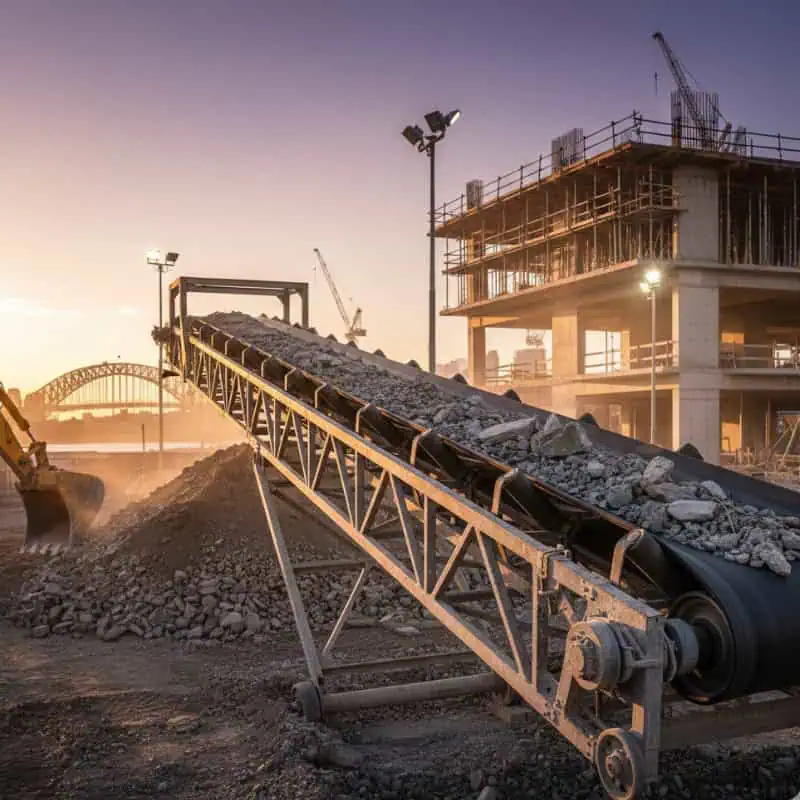
• Transport rubble and demolition waste
• Move materials in confined or elevated spaces
• Reduce reliance on manual handling
Temporary conveyor systems are particularly effective where site layouts change regularly or access is limited.
Warehousing and Distribution
Warehouses use conveyor belts to:
• Improve order processing efficiency
• Reduce repetitive manual handling
• Support high-volume material movement
Short-term conveyor hire is often used during seasonal peaks or warehouse reconfigurations.
Manufacturing and Industrial Facilities
Manufacturing environments rely on conveyor belts to:
• Move materials between production stages
• Maintain consistent workflow
• Reduce downtime caused by manual handling
Temporary conveyors are commonly used during shutdowns, upgrades, or production increases.
Hire vs Buy — What Works Best for Sydney Businesses?
A key decision covered in this conveyor belt guide is whether to hire or purchase equipment.
When Conveyor Belt Hire Makes Sense
- Short-term or project-based use
- Temporary site setups
- Seasonal increases in workload
- Budget or cash-flow constraints
- Trialling equipment before long-term commitment
For many operations, conveyor belt hire options in Sydney provide flexibility while ensuring access to professional-grade equipment without ownership costs.
When Buying a Conveyor Belt May Be Suitable
- Permanent installations
- Continuous daily operation
- Fixed production lines
Even in these cases, businesses may still hire conveyors for temporary or overflow requirements.
Safety and Compliance Considerations
Safety is a critical factor when selecting and operating conveyor belts. Poorly chosen or maintained conveyors can create serious workplace risks.
Key safety considerations include:
• Guarding and emergency stop mechanisms
• Clearly defined loading and unloading areas
• Operator training
• Regular inspections and maintenance
Guidance from Safe Work Australia’s machinery safety resources highlights the importance of managing risks associated with conveyor systems to protect workers and maintain compliance.
How to Choose the Right Conveyor Belt for Your Operation
The most effective conveyor belt solutions are those that align with:
• Material type and weight
• Operating environment
• Duration of use
• Site access and layout
• Workplace safety requirements
Rather than selecting equipment based on assumptions, Sydney businesses benefit from choosing conveyor solutions matched to real operational needs.
Common Conveyor Belt Questions
How do I choose the right conveyor belt?
Assess the material being moved, site conditions, project length, and whether the conveyor is required temporarily or long-term.
What conveyor belt is best for temporary projects?
Portable and modular conveyor systems are ideal for short-term use and changing site conditions.
Is it better to hire or buy a conveyor belt?
Hiring is often more cost-effective for short-term or project-based needs, while buying may suit permanent installations.
Are conveyor belts safe to use on construction sites?
Yes, when installed and operated correctly, conveyor belts can improve safety by reducing manual handling risks.
Final Thoughts
This conveyor belt guide shows that choosing the right belt comes down to understanding materials, applications, and how long the equipment is needed. For Sydney businesses, hiring a conveyor belt often provides the flexibility and efficiency required for modern projects without long-term commitment.